- hello@group8.co
- 12 Marina View, Singapore

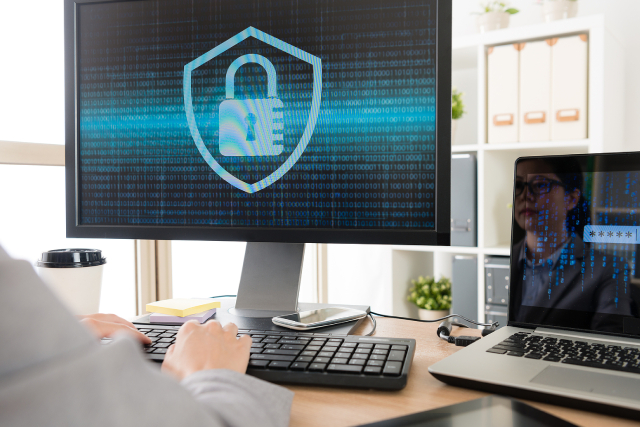
Running a small business takes an enormous amount of energy. Between managing operations, keeping customers happy, and staying on top of finances, cybersecurity can feel like a problem that belongs to someone else: the big corporations with dedicated IT teams and seven-figure security budgets. It is an understandable assumption, but it is also one that cybercriminals are counting on.
The reality is that small businesses face many of the same digital threats as large enterprises, but with a fraction of the resources to deal with them. That gap is precisely what makes them attractive targets. A breach that a large company might absorb financially and reputationally can be devastating for a small business. Understanding that risk and taking practical steps to address it, is not optional anymore. It is simply good business.
One of the most persistent misconceptions about cyber threats is that attackers are primarily motivated by fame or challenge, that they want to bring down a household name. The truth is far more mundane. Most cybercriminals are motivated by profit, and profit comes from wherever the effort-to-reward ratio is most favourable.
Small businesses often hold more valuable data than their owners realise: customer payment details, employee records, supplier contracts, and login credentials for cloud platforms. At the same time, they typically have fewer controls in place to protect that data. No dedicated security team, ageing software that has not been updated in months, and staff who have never received formal cybersecurity training are not unusual circumstances for a small business, and attackers know it.
Engaging cybersecurity services does not have to mean signing up for an enterprise-level contract that eats into your operating budget. Many providers offer scalable options that match both the size of your business and the nature of your risk exposure. The key is knowing where to start, and that begins with an honest look at your current position.
Not all security gaps are created equal. Some are theoretical risks that may never materialise; others are open doors that attackers walk through routinely. For small businesses, the most consequential vulnerabilities tend to cluster around a few key areas.
Weak access controls are consistently among the most exploited. Reusing passwords across multiple accounts and failing to remove access when employees leave the business are habits that feel harmless until they are not. Multi-factor authentication (MFA) is one of the simplest and most effective countermeasures available, and it costs very little to set up.
Phishing remains the entry point of choice for a large proportion of attacks. Staff who have not been trained to recognise suspicious emails, unusual requests, or impersonation attempts are a significant liability, not through any fault of their own, but simply because they have not been given the tools to respond appropriately. Cybersecurity training is crucial for employees as it is one of the highest-return investments a business can make, regardless of size.
Outdated software is another recurring problem. Every unpatched system is a known vulnerability, one that attackers can scan for and exploit at scale. Keeping operating systems, applications, and firmware up to date is not glamorous work, but it closes doors that would otherwise remain open indefinitely.
Strengthening digital safety does not require doing everything at once. It requires making consistent, deliberate progress across the areas that carry the most risk. For most small businesses, a practical security foundation looks something like this.
Start by understanding what you are protecting. Map out where your sensitive data lives: which systems hold customer records, where financial information is stored, which platforms your staff access regularly. You cannot protect what you have not identified.
Next, address access. Implement MFA across all business accounts where it is available. Review who has access to what, and remove permissions that are no longer needed. Ensure that when staff leave, their accounts are disabled promptly.
From there, focus on your people. A brief, practical session on how to spot phishing emails and what to do if something looks suspicious can meaningfully reduce your exposure. Even a short, regular conversation about current threats keeps the topic alive and staff alert.
Back up your data regularly, and make sure those backups are stored separately from your primary systems. Ransomware attacks work by encrypting your files and demanding payment for the key. A clean, recent backup gives you options that a business without one simply does not have.
Finally, think about monitoring. Many small businesses have no visibility into what is happening on their own networks: unusual login attempts, large data transfers, connections to unfamiliar locations. Even basic monitoring tools can surface early warning signs that something is not right.
It is easy to think of cybersecurity as a cost centre: money going out with no obvious return. But the cost of a breach tells a different story. Direct financial losses, regulatory penalties under Singapore's Personal Data Protection Act (PDPA), the expense of incident response and recovery, and the reputational damage that follows a public breach can together far exceed whatever a business might have spent on prevention.
The Cyber Security Agency of Singapore has reported that cybercrime cases continue to trend upward year on year, with phishing and ransomware remaining among the most reported incidents. For a small business, even a single successful attack can mean weeks of disrupted operations, lost customer trust, and costs that take months to recover from. Viewed in that light, investing in digital safety is not a drain on resources. It is a way of protecting everything you have already built.
Getting started with cybersecurity does not have to be overwhelming. The most important thing is to begin, to move from the assumption that it will not happen to you, towards an honest assessment of where you stand and what needs to change.
Group8 helps small and medium-sized businesses do exactly that. From identifying vulnerabilities to putting the right defences in place, the team brings practical expertise that fits the realities of running a smaller organisation. Reach out at group8.co to start a conversation about where your business stands and what you can do to protect it.