- hello@group8.co
- 12 Marina View, Singapore

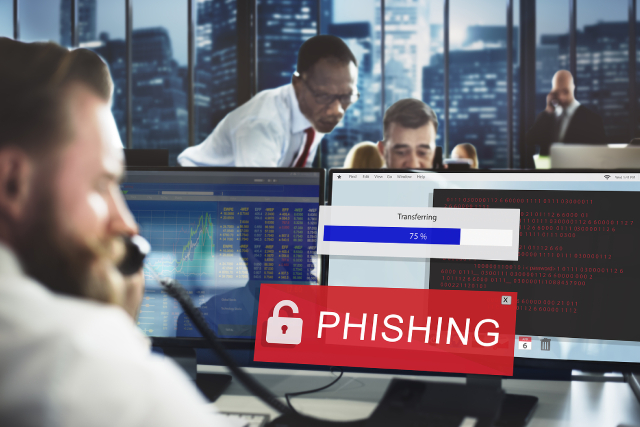
Most small business owners picture cybercrime as something that happens to bigger companies with more money and more to steal. That assumption is what makes smaller firms such an appealing target. A five-person design studio or a family-run logistics company rarely has a dedicated IT security team watching every inbox, which means a convincing fake invoice or a spoofed email from a "supplier" can slip through without anyone noticing until the money has already gone.
This is where phishing detection services come in, and for SMEs in Singapore, they have quietly gone from a nice-to-have to something close to essential. Phishing is no longer limited to obvious scam emails full of spelling mistakes and unlikely promises. Today's attempts are polished, well researched, and often tailored to sound exactly like a client, supplier, or colleague. Below, we look at what these services do, why smaller businesses are particularly exposed, and how the right setup can protect the whole organisation.
Larger companies tend to have layers of protection built up over years, along with staff whose entire job is to watch for suspicious activity. Smaller businesses usually do not have that luxury. Budgets are tighter, teams wear multiple hats, and cybersecurity often sits somewhere near the bottom of a long list of priorities.
That gap in defence is precisely what attackers count on. A phishing email sent to a large bank might get caught by three separate filters before a human ever sees it. The same email sent to a small accounting firm might land straight in someone's inbox, dressed up to look like a message from a client asking for an urgent bank transfer.
The financial impact can be severe for a business of any size, but for an SME it can be existential. A single successful scam involving a large transfer, stolen client data, or a locked-down system through ransomware can wipe out months of profit, or worse, put the whole business at risk. Recovering from an incident also tends to cost far more than most owners expect, once legal fees, lost productivity, and the time spent rebuilding client trust are added into the total.
At a basic level, these services are designed to catch suspicious emails, links, and attachments before they reach an employee's inbox, and to flag anything unusual that slips through regardless. The exact features vary between providers, but most solutions include a combination of the following:
The rise of AI-driven phishing has made this last point particularly important, since scams increasingly sound natural, personal, and free of the obvious red flags people were once taught to spot. A tool that blocks the technical threat still needs a workforce that understands what a scam looks like when it does slip through.
The value of phishing detection goes well beyond stopping a single dodgy email. Once a phishing attempt succeeds, the damage tends to spread quickly. Stolen login credentials can give an attacker access to client records, financial systems, or shared drives. From there, a single compromised account can turn into a company-wide incident within hours.
Good phishing detection services work as one layer of a wider defence, catching threats early enough that they never get the chance to spread. This has a practical benefit beyond security alone. Many clients, particularly larger corporate clients, now ask smaller vendors and partners to demonstrate basic cybersecurity measures before signing a contract. Having phishing protection in place is often part of that conversation, and being able to answer confidently can make a difference during procurement.
|
Without protection |
With phishing detection in place |
|
Suspicious emails reach staff inboxes unfiltered |
Suspicious emails are flagged or blocked before reaching staff |
|
Staff rely entirely on personal judgement |
Staff are supported by both technology and training |
|
A single click can compromise the whole system |
Threats are caught early, limiting how far damage can spread |
|
No visibility into attempted attacks |
Regular reporting shows what was caught and why |
For a business just starting to take this seriously, the good news is that getting proper protection in place does not need to be complicated or hugely expensive. Many providers offer packages specifically scaled for smaller businesses, focusing on the essentials.
A sensible starting point usually looks like this:
1. An assessment of current email security and any gaps in existing filters.
2. Implementation of email filtering and link scanning suited to your systems.
3. A short training session for staff on recognising common scam tactics.
4. Ongoing monitoring with regular reports so you can see what has been caught.
Choosing a provider who takes the time to understand your business tends to make the biggest difference in how well the protection holds up in practice.
Phishing is not going away, and the tactics behind it continue to get more convincing every year. For SMEs, treating email security as an afterthought is an increasingly risky bet, especially given how much of daily business now happens through email and messaging platforms. Proper detection tools, paired with a workforce that knows what to watch for, go a long way towards keeping a smaller business out of the headlines for the wrong reasons.
If you are ready to put proper protection in place and want a team that understands the specific challenges facing growing businesses, reaching out to Group8 is a sensible next step. Our team can walk you through the right setup for your business and help you get started without unnecessary complexity or cost.